From The Ground Up: Rufus Sunny on his evolution in Social Sector Communications

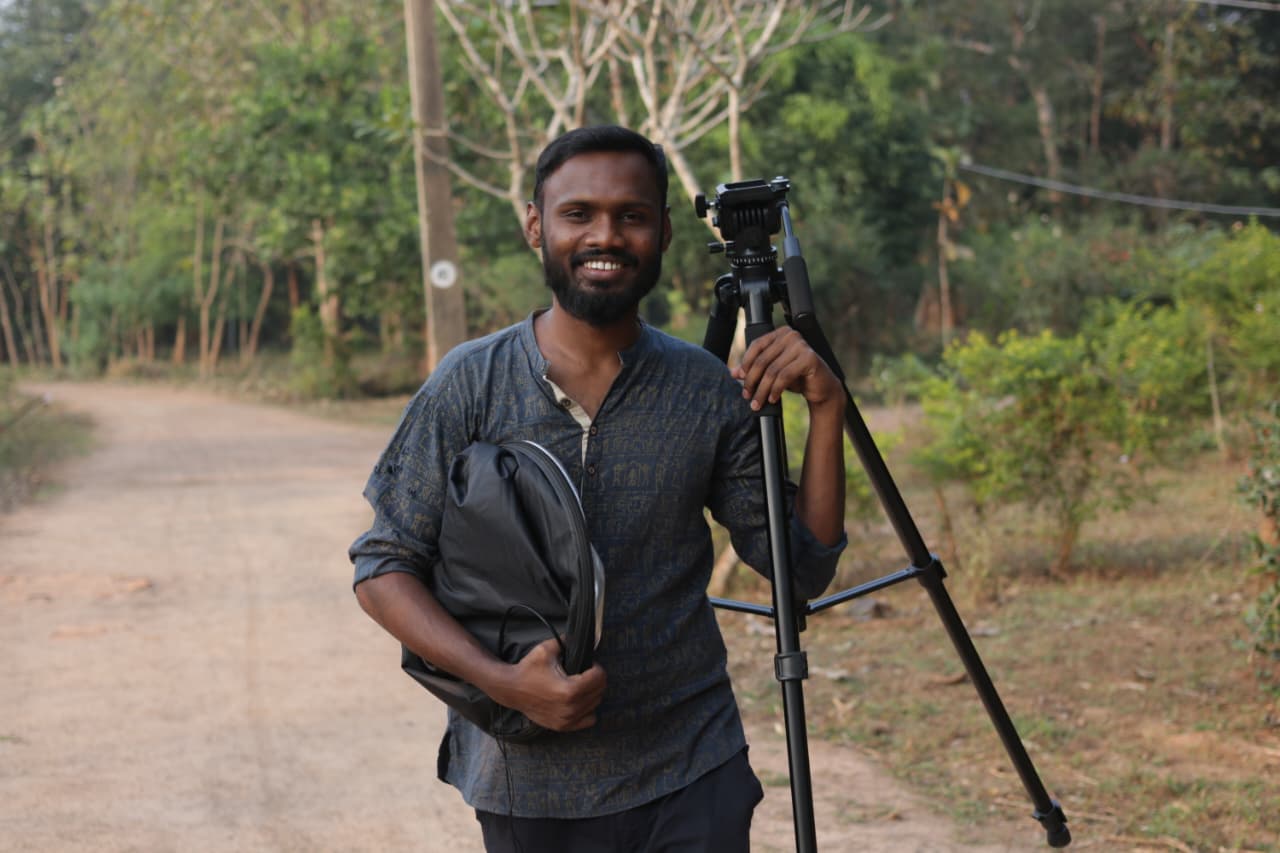
In 2018, Gram Vikas committed to building a dedicated communications function, with Wordmatter Founder, Priya, anchoring the process. The engagement sought to embed a sustainable function from within—identifying gaps, co-creating strategy with internal teams, and aligning the vision with leadership goals.
At the heart of this hands-on, high-involvement process was a group of young professionals, including Rufus Sunny, then a Junior Manager, learning skills and evolving ways to decentralise communications within Gram Vikas.
Lessons from this experience shaped Wordmatter’s flagship capacity building programme, The Method. Rufus’ evolution from a team member learning the ropes to a strategic leader heading communications at a national foundation showcases how ‘The Method’ not only builds an organisation’s capacity but also nurtures the next generation of communication leaders for the sector.
You have lived in diverse parts of the country and faced significant challenges. How have these experiences influenced your decision to enter social sector communications?
Let me take some time to reflect on this. I think the interest in language or my personal linguistic journey was something that brought me to the communications field. In some ways, you could say that from an early age, I was fortunate enough to grow up in some remote regions. My early childhood was in a small village in Nepal where my parents used to run a school. Like many boys at the time, I wanted to be a physicist or an astronomer, but there was something about language and creative interpretation that stayed with me from childhood.
Right from my time in Nepal, I was immersed in different cultures and languages, from Nepali, which I learned to speak, read and write, to the dialects of Maithili and other local languages. When my family shifted back to Kerala, I soon had to pick up Malayalam and Hindi for my studies. As we were constantly shifting places, learning language was more than academic curiosity; it was about making friends and building connections and curiosity. I learned that trying to speak to someone in their own language builds an immediate bridge. It’s a sign of respect and an effort to be included, and it fosters a genuine connection. This became a personal mission for me to connect with people through the power of language.
The second, and more unusual influence was observing how narratives were constructed from religious texts during my upbringing. I was fascinated by how a speaker could take a single verse, connect it to a historical event in another text, and weave it all together to deliver a powerful, cohesive message. This was my first real lesson in storytelling. It taught me how to link ideas and weave a compelling story around them, and that developed my skills of persuasion and connection, which are the very heart of communication.
So, when I finally decided to pursue my strengths, journalism felt like the most logical path, because it combined language, advocacy, and creativity which matched with my strengths. When I was in Pondicherry University, I discovered the technical side of media such as video production, editing, and camera setups, and I eagerly learned these skills, because at that time I realised that leading media companies hire multi-skilled professionals to reduce costs and I thought learning different skills within the technical side of media would strengthen my job prospects.
How did you come to work in the social sector?
After graduation, I joined the Youth for India Fellowship of the SBI Foundation and I was placed with Gram Vikas in Odisha. My entry into the social sector through the fellowship was initially intended to gain ground-level experience that would inform my work as a journalist. But once I was in the sector, I realised this was where all the threads of my life came together: the drive to help, the skill of connecting with diverse communities, and the passion for telling stories that matter. It was never a straightforward plan, but looking back, every experience right from learning new languages to deconstructing narratives was probably preparing me for a career in social sector communications.
When you first joined Gram Vikas, first as a SBI Youth for India (YFI) Fellow and then later joining the communication group, you began by documenting traditional agricultural practices and later worked on migration stories and community media. Are there specific projects from those early days that made a lasting impact for you?
Yes, all these were programmes that are close to my heart, but I feel the way in which Gram Vikas democratised communications is something that has a lasting impact.
When I was an SBI YFI Fellow in Gram Vikas, I used to have great ideas on how communications could be. As I joined the communications team, I realised there are a lot of operational challenges as well to getting good communication out.
Someone like Rufus, Ajaya, Chandrika, Jaison, Dibya, Santosh or Priya (people who were in the core communications team in Gram Vikas at the time) cannot always be on the field to get an authentic story all the time. Not that other team members were not capable of it but it is really an operational challenge. The strategy that we adopted then was to decentralise communications by training our on-ground teams.
We had over 300 team members, out of which a majority were in the field doing incredible day-to-day work, which was not being captured. And we realised they had to be trained to become storytellers themselves.
We created a comprehensive training module in local language covering the fundamentals of storytelling along with practical skills in photography and videography. There were multiple iterations. After each training in a different location, the team gave us inputs on how to improve the training.
The training document and methodology were co-created with all team members. Over a year and a half, our team trained nearly every team member in the organisation.
What came out of this long effort in capacity building?
"The impact was transformative: it fundamentally changed the culture of communications at Gram Vikas. Suddenly, people didn’t just understand what communication was, but they understood how vital it is for them to share their work."
The first stage of impact was that we started seeing better quality photos coming to us from the district teams. Then a few of our field team members started making videos and documenting the village life outside their typical work scope.
Something very inspiring was to see one of our colleagues, who sadly is no longer with us, Debaraj, creating his Youtube channel to document community stories. Another, Basant, created his own training video on rainwater harvesting to educate volunteers.
Seeing that we had ignited a spark in people to take ownership of their narratives is a success I will always carry with me.
Right now, I see Gram Vikas field teams posting more on LinkedIn, which is very inspiring. My personal goal when I joined the development sector was to teach people how to tell their own stories, and this project was the direct fruition of that ambition.
What are the ideas, practices or values from your time working as a junior manager in communications at Gram Vikas that you still appreciate?
Looking back, I feel my time with Gram Vikas really helped set some core foundations for my work that are still helping me.
"The most important thing I carry with me is the deep sense of community and being grounded. "
Gram Vikas wasn’t just an office, it was a place where we were deeply connected to the ground reality through our field teams.
"This connection taught me that authentic storytelling is born from that proximity."
Being able to go to a village and speak directly with people ensured our communication was always truthful and never diluted.
Although I didn't really see it this way when I was working there, I now realise this was only possible because of an enabling management that constantly pushed us to be in the field, understanding that real impact can only be captured on the ground. Finally, I benefited from the holistic, hands-on experience because the communications team was growing, much like a startup, so I had to do everything from writing and photography to video and strategy, which gave me a 360-degree view of the entire process.
How has your communication and leadership style evolved as you moved into a senior role at a national-level foundation?
It was very overwhelming for me personally to move to SBI Foundation and lead the communications vertical, as the scale is just completely different. Having said that, the 'jack-of-all-trades' experience from my previous role became critical in this transition.
My role has fundamentally shifted from doing to managing. At Gram Vikas, I was the one documenting stories on the ground, whereas now my job is to build and manage the systems, the team, and the agency partners that allow our organisation to communicate effectively on a national scale.
"That experience of having done everything myself is what allows me to manage specialists effectively today, simply because I understand what goes into each vertical."
I've also had to adapt to a new culture, moving from the community-centric feel of Gram Vikas to a more corporate structure, which required me to learn how to navigate different internal dynamics and master strategic prioritisation.
In essence, if I reflect closely, my previous role honed my skills as a storyteller, while this senior role is shaping me as a strategist. The core values from Gram Vikas, like the pursuit of authenticity and grounded truth, continue to be my guiding principles. The real evolution is in how I apply them, not always with my own hands, but by building the strategy and culture that can deliver on those values at a national level.
How do you see the role of communications evolving in the development sector?
The role of communications has evolved from being a support function to being the absolute core of an organisation's survival and growth. The landscape has changed so fundamentally that our entire approach to telling stories and representing voices must change with it.
"We must be honest about the environment we operate in. The development sector in India is incredibly crowded. Thousands of NGOs are competing for a limited pool of domestic CSR and philanthropic funds."
But the competition isn't just for money; it's for attention. An NGO isn't just competing with the organisation next door. It's competing with Zomato's marketing, with a content creator's viral reel, with the entire digital entertainment ecosystem.
The attention span of everyone, including the programme manager at a funding agency, a partnership manager, or a government employee, is shrinking. In this context, the old methods of sending a proposal and hoping for the best are no longer enough. If you can't capture attention, you don't exist.
How should communication in the development sector respond to the changing reality of shorter attention spans and increased competition?
This reality demands a radical shift in mindset to what I call a "communications first" approach. For too long, communications have been treated as an afterthought—something you do after the project is complete. That model is broken.
Today, communications must be planned with the same seriousness, strategy, and budget as the programmatic work itself. Just as a corporate brand has daily marketing meetings, an NGO needs to have an annual communications plan that is as detailed as its project proposals.
The brand identity, the colours, the fonts, the core message— everything must be consistent and professional. The tools are more accessible than ever, with platforms like Google Ad Grants and Canva Pro offering free services to non-profits.
There is no excuse for not taking it seriously.
"The question every leader should ask is: "When we planned this project, did we also plan how we would communicate it every single day?"
How must communications evolve in representing grassroots voices and telling authentic stories?
This brings us to the most important implementation aspect: how we tell stories. The era of the highly polished, professionally shot documentary as the pinnacle of authentic storytelling is over. We live in a user-generated content (UGC) driven society. Authenticity today isn't about 4K cameras; it's about a genuine voice. A story told on a simple smartphone, by the person who lived it, is infinitely more powerful and resonant than a story told about them by a communications team.
Our role as communicators must therefore shift from being creators to being enablers. Our job is to empower the community with the tools and confidence to stand in front of the camera and tell their own truth.
This is where grassroots voices are truly represented. It's not about us scripting their narratives; it's about us building their capacity to create their own. The work of an NGO is filled with 365 days of potential stories.
"The challenge isn't a lack of content; it's the lack of investment in the people and processes needed to capture and share it authentically and consistently."
Ultimately, the NGOs that will thrive in the next decade are those that understand this. They will find their niche, they will be relentlessly consistent, and they will invest in communications not as an overhead cost, but as their most essential tool for creating impact.
What advice would you give young professionals, looking to build a career in social sector communications?
I’d say it’s a fantastic choice. Social sector communications is a unique niche where you can genuinely merge your craft with a purpose. You get to work on development issues you care about while practising the art of storytelling, design, or strategy.
What key practices must young professionals lead with?
The most important advice I can give is to think of yourself as a film director, not just a crew member. A director doesn't need to be an expert cinematographer, editor, or musician, but they need to understand what each role does, have a clear vision, and know how to bring all the pieces together to create a cohesive final product. That's your job in communications.
You may not be the best video editor, but you need to know what makes a compelling video. You may not be a professional writer, but you need to recognise a good story and know who in your organisation can help you tell it.
Your role is to be the orchestrator. This means you must be a jack-of-all-trades—you need a working knowledge of everything so you can guide the process, even if you're hiring a consultant or collaborating with a colleague to execute a specific task. Don't wait to be an expert in one thing; your value lies in your ability to see the bigger picture.
A huge part of that bigger picture is understanding that communications cannot happen in a silo.
"Your success will depend entirely on your relationships within the organisation."
You need to know your organisation inside and out—be present in every important meeting, understand the programmatic challenges, and be aware of the informal conversations happening in the hallways. Make it your mission to build connections with everyone, from the field team in different thematic areas to the HR and finance teams.
If you want to tell an authentic story about a water project, you need the trust and cooperation of the team on the ground. You are the central node of the organisation’s nervous system, and the strength of your connections determines the flow of information and stories.
What enduring mindsets must young communications professionals develop over time?
It is something you would not typically find in a job description: embracing the role of a 'Cultural Officer'. Your responsibilities extend beyond external posts and press releases; you are also a guardian of the internal culture. A positive, collaborative, and motivated internal environment is the foundation for any authentic external communication.
When morale is high, people are more willing to share stories. When teams feel connected, cross-functional campaigns are more successful. When people are proud of where they work, that becomes your most powerful brand message.
Don't be afraid to be the person who brings people together, celebrates small wins, and champions a positive culture. It is one of the most strategic things you can do as a communications professional.
Ultimately, communications in this sector today is no longer a passive desk job. It's a dynamic and demanding role that requires you to be a strategist, a connector, and a culture-builder. Don't wait for permission or for the ‘perfect’ moment. Own your role, build your network, and start creating.
Acknowledgement
Sukriti Ojha edited the interview.
One more story worth telling